


Research areas
5 Interdisciplinary missions, 8 research priority areas open for the first CALL#1 2026.
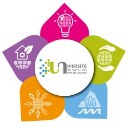
Candidates are required to present a research project aligned with one of the 8 research areas (out of 15) listed below, and consistent with the five interdisciplinary missions of UPPA. Only the non-greyed research areas are open for the first call (CALL #1 – 2026).
The five interdisciplinary missions of the UPPA are:
1. Adapt coastal, forest and mountain ecosystems to make them more resilient
This mission englobes areas as :
- climate impact on freshwater ecosystems,
- impact of environmental change on coastal zones,
- micro- and nano-plastics in marine and coastal environments,
- pollutants, and contaminants, including emerging ones and
- environmental monitoring (sensors, bio-indicators, statistical modelling).
The postdoctoral candidates will be able to present their research projects within the following priorities:
Coastal regions are increasingly threatened by sea-level rise and more frequent extreme weather events. These changes heighten the risk of wave-driven flooding, necessitating more accurate and comprehensive modeling approaches. Traditional wave forecasting methods, which typically offer average or integrated wave conditions near the coast, are no longer sufficient in the face of future climate scenarios. To address the complexities of wave dynamics, phase-resolving models have gained prominence for their ability to predict wave-driven hazards. A critical aspect of advancing nearshore wave modeling lies in the adoption of high-performance computing and massive parallelization techniques. To optimize computational efficiency, the use of variable meshes is crucial, allowing for refinement of the large-scale domain in localized areas while keeping the overall computational cost manageable.
Associated partners for secondments: Department of Mathematics - University of Bergen (NO), Leichtweiß-Institute for Hydraulic Engineering and Water Resources - Technical University Braunschweig (DE), Suez Eau France (FR), AZTI Tecnalia (ES), University of Zaragoza (ES), University of Hawaii at Manoa (US)
Efforts to combat climate change are crucial for protecting our planet but can also have unintended consequences, especially in rural areas which typically have fewer resources and alternatives than urban areas. In the quest for greener behaviours, imposing environmental policies that do not account for local contexts can create resistance among rural communities that may see these changes as threatening their way of life, economic stability, or cultural traditions, leading to increased inequality and social tension. It is necessary to delineate the impacts in rural communities to develop appropriate policies. Different axes need to be studied as (i) Comparing the vulnerability of rural and urban communities to climate change, (ii) Analysis of the socio-economic effects of climate change on rural communities and (iii) Identification of key policy strategies to increase the capacity of rural communities to cope with the future challenges of climate change.
Associated partners for secondments : Department of Economics - University of Alberta (CA)
The fate of fish populations is challenged by many pressures, among which direct climatic change affects individual growth, survival, and reproductive success, so that the density of the population is altered, and its genetic composition also evolves as a response to natural selection, shaping phenotypic diversity alongside developmental plasticity and behavioral flexibility. Climate change causes selection on phenotypic traits, but its evolutionary response needs to be elucidated as (1) genetic variation of natural populations for functional traits could be sufficient to fuel the evolutionary response to natural selection, (2) different mechanisms of adaptation can interfere with phenotypic plasticity or behavioral flexibility possibly hampering or favoring natural selection and (3) diversity of environmental variables that are directly and indirectly affected by climate change exposes traits to selective pressures that can be spatially and temporally heterogeneous in the direction of selection, the response to which is complex to predict. The answers are key to build conservation strategies that rely on evolutionary response to climate change.
Associated partners for secondment : Centre for Biological Diversity - University of St Andrews (UK), Scimabio (FR)
2. Reconcile development, a safe environment and preserved biodiversity
This mission focuses on :
- aquaculture and nutrition,
- carbon capture and geological storage,
- eco-processes, bio-inspired materials, and
- food safety.
The postdoctoral candidates will be able to present their research projects within the following priorities:
2.1 From environmental to human health through advanced sustainable chemical & biological approaches
This research area aims to adopt a multidisciplinary approach, closely linking environmental systems to human and animal health, and covers some crucial scientific concerns, that will integrate innovative chemical, biological and computational methods to address key challenges, contributing to environmental sustainability, global health and food security. Identified key research areas to be addressed are 1/ Innovative experimental methodologies and analytical approaches, 2/ Chemical mathematical modelling and discrimination of contaminants biological impacts, 3/ Microbial and nature-based method for sustainable agriculture, water management and healthcare, 4/ Advanced sustainable methods for pollution abatement and increasing societal awareness.
Associated partners for secondments : Department of Biology - University of Ottawa (CA), Applied Mathematics - University of Gdansk (PL), Consejo Superior Investigaciones Científicas (ES), University Oviedo (ES), TotalEnergies (FR), Florida State University (US)
Aquatic food systems play a fundamental role in global food security, since the demand for aquatic food products is increasing at almost twice the rate of the world’s population. However, the sustainable development of aquaculture is threatened by climate change, that is making water resources more unpredictable and scarcer, leading to poorer water quality. It’s essential to increase the resilience of aquaculture systems to climate change and improving the robustness of species. A great impact can be achieved with the development of innovative strategies on nutritional practices or early-life programming since (i) feeding is a well-known lever to improve production performance, and a way to significantly promote animal health and resilience to environmental disturbances and (ii) early programming can also be used to adapt animals with nutritional physiology playing a central role in these adaptation mechanisms.
Associated partners for secondments: Faculty of Biosciences and Aquaculture, Nord university, Bodø / Nofima (NO), Wageningen University (NL), Universidad Vigo (ES), Memorial University of Newfoundland (CA), CIIMAR (PT)
The mechanics of materials and structures is a vast field that is approached at UPPA through 2 categories of applications: (1) the mechanics of geomaterials, geostructures and civil infrastructures, considered in the context of bio-inspired materials and eco-materials, and with a perspective towards the sustainability of civil infrastructures, and (2) the optimization of engineered structures with a current emblematic application in aeronautics. These challenges call on skills in applied mathematics and solid mechanics, with training in physics and chemistry. Building on such a conducive environment, two research areas are open (i) Data and physics-driven modelling geomechanics and multiphysics problems by the implementation of machine learning and data driven analyses and (ii) Optimization in the presence of uncertainties for shape optimization to avoid leading to designs that are ill-suited to the actual practical configuration.
Associated partners for secondments : Civil and Environmental Engineering - Northwestern University (US), Mechanical Engineering dept - University of Zaragoza (ES), Computer Science Department - KU Leuven (Belgique), Sixense NECS (FR)
3. Organise energy subsidiarity at the territorial level
The focus of this mission is on :
- energy law,
- energy efficiency, sobriety and energy poverty,
- sustainable hydrogen generation, biogas and new energies,
- materials for energy storage,
- subsurface, a common good; and
- territorialisation, mobilisation and politicisation of energy.
The postdoctoral candidates will be able to present their research projects within the following priorities:
Hydrogen production has gained significant attention as a clean energy source, with subsurface hydrogen generation and photo(electro)catalysis as promising pathways. However, efforts need to be fulfilled in understanding hydrogen production processes in subsurface environments and hydrogen generation by catalytic processes, anion exchange membrane electrolyzers, including the sustainability and social science perspectives to ensure that hydrogen production is both environmentally sustainable and socially responsible, including (i) novel materials, physicochemical processes and devices for hydrogen production, (ii) exploration and monitoring technologies, (iii) sustainability assessment and (iv) societal impact.
Associated partners for secondments : Institute of Chemical Research of Catalonia (ES), CSIRO (AU), 45-8 Energy
Advancing energy conversion and its storage presents still today several challenges. A specific interest arises from organic photovoltaics, electrochemical and underground energy storage and their integration into optimal systems. These areas represent critical solutions in the transition towards sustainable energy systems, addressing both energy security and environmental sustainability. A promising approach involves the synergy of direct energy harvesting through organic photovoltaics, its storage with battery technologies and their integration into multienergy and multivector systems, considering the implementation by the mix of additional conversion and storage systems. However, several challenges remain unsolved as optimizing organic photovoltaic materials, development of next-generation battery systems with new electrochemically active materials, and the relevant to study the connection of both previous technologies in Renewable Energy Systems.
Associated partners for secondments: Oninn Centro de Inovações (BR), Department of Chemical Engineering – Polytechnical School University San Paulo (BR), Federal University of Rio Grande do Norte (BR)
To accelerate the deployment of cleaner energy technologies, their development time and costs need to be considerably reduced. A key enabler for this is stronger reliance on computational fluid dynamics, to reduce time-consuming and very costly physical testing. However, current models have been highly tuned for today’s technology but cannot be relied on when moving into new design spaces. This is because traditional modeling based on physical reasoning and intuition has its limits and model calibration was performed using limited amounts of data. However, recent advances in computing power and experimental diagnostics have led to the generation of vast amounts of data, and modern machine learning methods have emerged capable of identifying complex relationships between inputs (data) and outputs (models). The development of novel models that are considerably more accurate and reliable by exploiting the complementarity between advanced turbulence models and modern machine-learning is needed.
Associated partners for secondments : Computational Mechanics - Department of Mechanical Engineering - University of Melbourne (AUS)
4. Question borders and meet the challenge of differences
This mission focuses on :
- otherness and identity,
- borders: representations and cooperation,
- hybridisation, comparison and circulation,
- heritage, traces and commons,
- multilingualism and interculturality.
The postdoctoral candidates will be able to present their research projects within the following priorities:
Immigration is an ever-increasing phenomenon worldwide. Today, over 280 million people live outside their country of origin. In South America, for example, new nations have historically been lands of immigration. As such, countries have implemented essentialist policies and regulations that have manufactured ‘undesirables’ at the administrative level. Other countries have closed their borders selectively because of changes in the migratory flows influenced by international events (e.g. European inter-war political instability, United States’ protectionist retreat). Thus, the question on how to ‘sort’ migrants arise: Should we welcome immigrants, and if yes to what extent? How does the ‘host-country’ problem differ from nation to nation? How have governments practiced political, racial, ethnic and religious selections? Finally, how have administrative practices defined ‘undesirability’?
Associated partners for secondments : School of Interdisciplinary Advanced Social Studies - National University of San Martin (AR)
Media culture (cinema, radio, television, comics, etc.) is a specific domain in between scholarly, traditional, and popular culture. Nevertheless, it has significantly redefined cultural practices in terms of leisure and market, giving rise to new cultural objects and uses, most often endowed with low symbolic capital. These can quickly become obsolete. Thus, there is an urgent need to identify these transnational practices and develop the heritagization of media cultures at the European level (e.g. mapping of first amateur or official museums dedicated to history of media culture).Examining the notion of heritage within a new framework of media culture allows for an exploration of the ways in which objects from mass culture contribute to reconfiguring differences derived from national legacies and forge new transnational communities of cultural interest in Europe.
Associated partners for secondments : KU Leuven / Royal Library of Belgium (BE), INA (FR)
‘Alterity’ underpins equal access to participation, representation, and decision-making, forming the basis of inclusive societies. But otherness can also be the repository of tensions regarding effective participation and representation. In/exclusion in the communities are constantly being negotiated, and ensuring inclusiveness has been a major challenge. ‘Alterity in Crisis’ explores questions related to crisis and conflict in citizenship from a cross-disciplinary perspective: What are the lived experiences of inclusion and marginality? What edges of citizenship are most at risk? What do citizen experiences reveal about the state of alterity? Such questions lead to innovative responses from non-state actors and individuals (e.g. new forms of civic participation). ‘Alterity in Crisis’ aims to identify experiences surfacing in personal and oral history accounts and analyze lived experiences of in/exclusion through ordinary forms of ‘organized interests’ and investigates ‘policymakers’ (i.e. polymorphous state and government authorities involved in policymaking) and asks: How are questions of ‘alterity’ framed as policy problems? How do ‘politics of alterity’ create citizenship regimes?
Associated partners for secondments : School of Law - Queen's University Belfast / The Linen Hall (UK)
5. Represent and build the territories of the future
This mission concentrates on :
- adapt regions to environmental change,
- low-carbon construction,
- autonomous housing, adapting habitats and urban environments,
- new collective and individual behaviours and
- new societal and regulatory issues.
The postdoctoral candidates will be able to present their research projects within the following priorities:
Digital technologies have huge potential to address the challenges faced by sustainable development, climate change as well as proposing innovative services for smarter territories: monitoring of ecosystems, optimizing usage of natural resources, qualifying, and quantifying the impacts of human activities and mitigation measures, increasing resilience of fragile communities, etc, to name a few. Two promising digital technologies of cyber-physical systems have been identified to contribute to the development of digital tools to better understand environmental ecosystems, achieve environmental targets and propose innovative services for territories: (i) Embedded Intelligence approach where the AI processing tasks can be realized in a smart sensing device itself, unlocking a wide range of environmental applications that often need to deploy very low-power smart sensing systems in very remote areas, (ii) Digital Twins accurately represent a physical object through a virtual digital model, which provides a virtualized environment to test, experiment and predict various behavior and outcomes of objects without stressing the object and its resources.
Associated partners for secondments : WAZIUP e.V. (DE)
Territories and Mobility looks at ways to improve access across a territory while fighting global warming. Everyone needs access to basic things like food, post, banks, and pharmacies. Differences between territories, however, create major inequalities between citizens. Rural and mountainous areas are especially affected by a lack of mobility, including unequal access to healthcare. The EU has promised to cut greenhouse gases completely by 2050 and the freight and logistics sectors are encouraged to reduce their carbon footprint. This should not affect mobility in disadvantaged areas, however. Here, the challenge is to reduce transport emissions while maintaining productivity and meeting public expectations for mobility. For instance, hospitals and healthcare professionals, despite limited funds, are working to improve access to care and fight social inequalities in rural and mountainous areas. New ideas are being invented to improve access to health and reduce global warming (e.g. remote diagnosis through connected health devices developed by ‘innovation start-ups’). Likewise, public institutions also need to create new policies to improve access and mobility in their territories.
Associated partners for secondments : University of Turin (IT)
Water is a crucial element, essential to life. It plays a vital role in climate, material behavior and soil stability. With extreme climate phenomena, it has become key to develop models that quantify the effects of water presence or absence in our environment. These models can help us anticipate and increase our resilience to face climate change, elucidating the role of water in porous media within natural and artificial structures. Although predictive models have existed for several years, further development is needed to provide more accurate information. A focus can be made on (i) the fight against urban heat islands by water evaporation, either through planting or building materials, to better dimension and quantify the beneficial effects and (ii) the developments in coupled thermo-hygro-mechanical non-linear modelling needed to predict the long-term behavior of radioactive waste repositories, quantify the tightness of containments, quantify heat exchange in geothermal energy or simply predict the stability of a rock mass.
Associated partners for secondments : University of Liege (BE), Agence Nationale pour la gestion des Déchets Radioactifs (FR), HOLCIM Innovation Center (FR)